Pediatric Dentistry Residency Program

Pediatric Dentistry Residency Program

About the Residency Program

Pediatric Dentistry Residency

The two-year pediatric dentistry residency program starts after graduation from dental school to immerse dentists in scientific study and clinical experience. The trainee learns advanced diagnostic and surgical procedures, along with child psychology, clinical management, oral pathology, child-related pharmacology, radiology, child development, management of oral/facial trauma, care for patients with special needs, conscious sedation and general anesthesia.

The residency program in pediatric dentistry is a hospital-based clinical program with didactic courses provided by the faculty of Children’s Wisconsin, the Medical College of Wisconsin and Marquette University. The program prides itself on a unique commitment to continuity of care. Each resident follows a specific patient pool during their two years of training and completes comprehensive care for each of those patients.

Children's Wisconsin
8915 W. Connell Ct.
MS 310
Milwaukee, Wisconsin 53226

Residency Program Director: Carli Di Gioia, DMD

Residency Program Coordinator: Sandra Olsen, MS

Application

Applicants must have the following to be considered for admission:

  1. D.D.S. or D.M.D. degree obtained at a CODA accredited dental school
  2. National Boards and Part I and Part II or INBDE

Applicants must:

  1. Submit an application through the Postdoctoral Application Support Service (PASS). Application instructions can be found at the PASS website.
  2. Register with the Postdoctoral Dental Matching Service (MATCH). Information about the MATCH
  3. Upon invitation, a personal interview is required. At that time, a high-resolution photo will be requested. No photos are needed before the invitation to interview. Interviews are held in November and December.

The application deadline for PASS is Oct. 1 of the year preceding matriculation.

All correspondence regarding program information and application should be directed to:

Sandra Olsen, MS
Residency Program Coordinator
Coordinator email: SOlsen2@childrenswi.org
Coordinator phone: (414) 337-3483

Further Information

The Children’s Wisconsin Dental Center is one of our busiest specialty clinics, managing over 34,000 visits annually. As a resident, you will gain unmatched hands-on experience treating a diverse patient population across four Milwaukee-area locations.

Our program bridges the gap between complex hospital-based care and community health:

  • Diverse Case Load: Approximately 60% of our patients are healthy children from varied backgrounds, while 40% present with complex medical, physical, or cognitive challenges.
  • Clinical Rotations: You will rotate through our main hospital campus for orthodontics, sedation, and surgery, as well as our community clinics (Forest Home, Next Door, and Midtown) to serve high-density and underserved areas.
  • Integrated Care: We receive direct referrals from elite programs like the Herma Heart Institute and the Midwest Children’s Cancer Center.

This residency goes beyond clinical skills, it is designed to build your expertise in pediatric dentistry while fostering a deep understanding of community barriers and the impact of dental care on families in need.

Courses and Seminars

The program offers a wide variety of courses and seminars to support a robust academic curriculum that enhances the resident’s education. Courses and seminars include:

  • Craniofacial Growth and Development
  • Board Preparation Review
  • Pulp Therapy in Pediatric Dentistry
  • Pediatric Dental Trauma
  • Pediatric Dental Infections
  • Pediatric Medicine
  • Preventive Concepts in Pediatric Dentistry
  • Practice Management
  • Transition of the Human Dentition
  • Cephalometrics
  • Oral Pathology
  • Orthodontic Diagnosis and Treatment Planning
  • Literature Review
  • Public Health and Advocacy
  • Concepts in Pediatric Dentistry (Behavior Guidance, Complex Special Needs, Case Reviews).

In addition, numerous lectures are provided within the hospital including Grand Rounds, Pediatric Trauma Rounds and Craniofacial Anomaly Rounds. Residents are given time to attend these lectures with their medical colleagues.

Research

All residents must complete an original research project. Each resident is paired with a faculty member to serve as a research mentor. Projects are presented to the entire Children’s Wisconsin Dental Center staff at the annual Resident Research Day in June.

Poster Presentation

All residents are expected to present a poster at a major meeting during their two-year program.

American Board of Pediatric Dentistry (ABPD) Certification

All residents are expected to complete the Qualifying Exam of the ABPD prior to completion of the program. In addition, mock oral boards are given with experienced faculty members to help the residents prepare for the Oral Clinical Exam portion of the ABPD Certification process.

Teaching

Residents teach pre-doctoral students at Marquette University’s School of Dentistry in the pediatric clinic and also provide lectures for the second-year pre-doctoral students. Each resident will also lecture a group of medical resident colleagues on topics in oral health and pediatric dentistry.

Clinical Training

Residents receive training in the full scope of advanced pediatric dental techniques including preventive dentistry, restorative procedures, behavior guidance, sedation, pulp therapy, oral pathology, hospital dentistry including OR procedures, pediatric medicine and oral/facial trauma, as well as training in interceptive and select comprehensive orthodontics. The program includes extensive training in dentistry for the medically compromised child, as well as the physically and cognitively challenged patient. Residents are expected to expand their knowledge of pediatrics and integrate dental diagnosis and treatment with the comprehensive medical needs of their patients.

Hospital Training

The hospital experience for the residents is extensive. Operating room cases, inpatient consultations, management of oral/facial infections and traumatic injuries and consultations with medical departments are a part of the resident’s daily life.

Rotations

Throughout the residency, various rotations are offered including pediatric primary care (one week), anesthesiology (four weeks), community health care (two weeks) and specialty medicine including: craniofacial surgery, otolaryngology, child advocacy, speech/audiology, feeding/nutrition, child development and special needs (one week). Residents also staff various interdisciplinary teams, such as craniofacial/cleft palate and the leukemia/lymphoma team. They attend regularly scheduled lectures and various department seminars with the pediatric medical staff.

Emergency On-Call

The residents provide 24-hour, 7-days-a-week on-call emergency care. Emergency call is done via pager and is rotated daily. A first and second-year resident are paired to share information and help with procedures. Each resident will be on-call approximately one week/month through the two years of training.
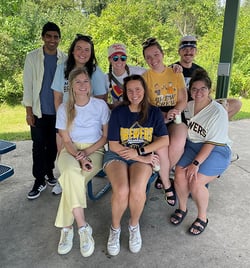
This is a 24-month program commencing on July 1 of each year. Mandatory orientation begins mid-June. Each year the program will accept five applicants through the PASS/Match Application services. The five residents will be compensated with salary and full benefits as hospital employees.

Resident Stipends

  • 1st year stipend: $61,300
  • 2nd year stipend: $62,900
  • Chief Resident: $65,200

Weekend moonlighting may be an option at the end of the first year and throughout the second year, upon approval of the Program Director.  Opportunities for weekend moonlighting may be available at various dental practices in the community.

Hospital Employee Benefits

Malpractice insurance, short-term disability insurance, life insurance, health insurance, 10 days paid vacation days in the first year and 12 days paid vacation in the second year are provided. Six to eight paid holidays are offered per year, and eight paid sick days (total).

Residents are also given eight education days beyond their regular vacation days to attend educational conferences and meetings. Meetings that residents may attend include the American Academy of Pediatric Dentistry (AAPD) annual session during the second year of training, the AAPD Sedation Course, and are given the opportunity to attend the Pediatric Oral Health Advocacy Conference (POHAC) in Washington DC or the AAPD Qualifying Exam Prep Course. Residents also attend the WDA Legislative Day to supplement their advocacy training. Attendance at the required courses is subsidized at approximately 80%, pending budget allowance. Additional meetings and courses may be attended upon approval of the Program Director. Lectures and seminars presented at Children’s Wisconsin are tuition-free or eligible for full tuition reimbursement.

Children’s Wisconsin is the region’s leader in pediatric care, located on the Milwaukee Regional Medical Campus. We are dedicated solely to the treatment of sick and injured children, offering primary, secondary, and tertiary services.

  • Capacity: ~300 medical/surgical beds.
  • Expertise: 5,000 employees and 1,000 medical/dental staff members.
  • Impact: 26,000 annual admissions and 680,000+ outpatient visits.

Dental Center Locations

Our residents practice at four modern outpatient clinics, all featuring digital radiography and electronic dental records.

Milwaukee Campus Dental Center
A 14,000-square-foot, 19-chair clinic connected directly to the hospital via skywalk.

Forest Home Dental Center
An 8-chair clinic serving the south side of Milwaukee.

Midtown Dental Center
An 8-chair clinic serving Milwaukee’s northwest side.

Next Door Dental Center
A 5-chair community clinic serving the surrounding northside area.

Surgical and Advanced Care

For dental cases requiring general anesthesia or specialized intervention:

  • 18 Hospital Operating Rooms: Including three dedicated Special Procedures-Day Surgery suites.
  • Specialized Equipment: Mobile operating carts, supply units, and mobile X-ray machines are available for all OR cases.

Applicants must have the following items completed and/or submitted for consideration:

  1. Graduate from a CODA accredited dental school
  2. Completed PASS (Postdoctoral Application Support Service) application
  3. Register with the National Matching Service
  4. Personal interview upon invitation. Upon interview invitation, a high-resolution photo (.jpeg file) must be sent directly to Sandra Olsen at solsen2@childrenswi.org.
  1. Patient volume: It is a large, diverse patient population with a significant portion of children with special needs. Residents have a very active patient schedule exposing them to a wide range of pediatric dental procedures and diagnostically challenging cases.
  2. Continuity of care: The entire Dental Center is strongly committed to ensuring that children are seen by the same provider for the duration of resident training. Residents are scheduled with the same patients consistently and can build relationships with patients and families while closely following their treatment outcomes.
  3. Staff: Attending faculty and supporting staff with long-term dedication to resident education. All faculty see their own patients every week in clinic alongside residents, which allows for daily mentoring and guidance. Residents are always supported by a dental assistant except during certain elective orthodontic visits.
  4. Behavior guidance: Residents gets extensive training and experience in the understanding and guidance of child behavior utilizing behavior guidance techniques including non-pharmacological methods, sedation and general anesthesia. Residents complete more than 50 cases of oral conscious sedation using midazolam (oral and intranasal), hydroxyzine, morphine, valium and lorazepam.
  5. Orthodontics: Residents successfully complete more than six cases of full brackets with orthopedic appliances in addition to various fixed and removable appliance cases. They also receive weekly didactic training and strong clinical supervision provided by a board-certified orthodontist.
  6. Trauma/emergency care: As a Level I trauma center, the Emergency Department provides a large and diverse group of patients requiring treatment of dental-facial trauma.
  7. Didactics: There is a comprehensive seminar/lecture curriculum, including advocacy training and hospital lectures such as Grand Rounds and Craniofacial Conference with medical residents and fellows.
  8. Facilities: The facilities are well-maintained with ample natural lighting.
  9. Diverse Team: The program boats high quality residents from diverse backgrounds.

Externship Opportunity

The Children's Wisconsin Pediatric Dental Residency Program offers a well-rounded externship experience for interested applicants. Time spent at Children's Wisconsin may include experiences shadowing in the dental clinic, working with our special-needs population, observing in the operating room, observing minimal and moderate sedation cases, participating on the craniofacial team, and observing orthodontic procedures. Externs attend lectures and may participate in on-call support with the current Children's Wisconsin residents.

The externship is limited to rising D4 dental students or practicing dentists seriously interested in applying this year for the following year’s resident class. Minimum dental school GPA is 3.4 for externship candidates (students at pass/fail dental schools are welcome to submit a CV for consideration).

If you are ready to request an externship, please submit a CV that notes a current GPA, or final dental school GPA for graduated dentists not currently in advanced training. Please send to Sandra Olsen at SOlsen2@childrenswi.org on or after Jan. 1. Once qualifications are confirmed and an externship is offered, applicants may request an externship date from the list of dates still available. About 20 externship experiences (three-day or five-day experiences) are offered from March-June, August and September. They are reserved for qualified candidates on a first-come first-served basis.